

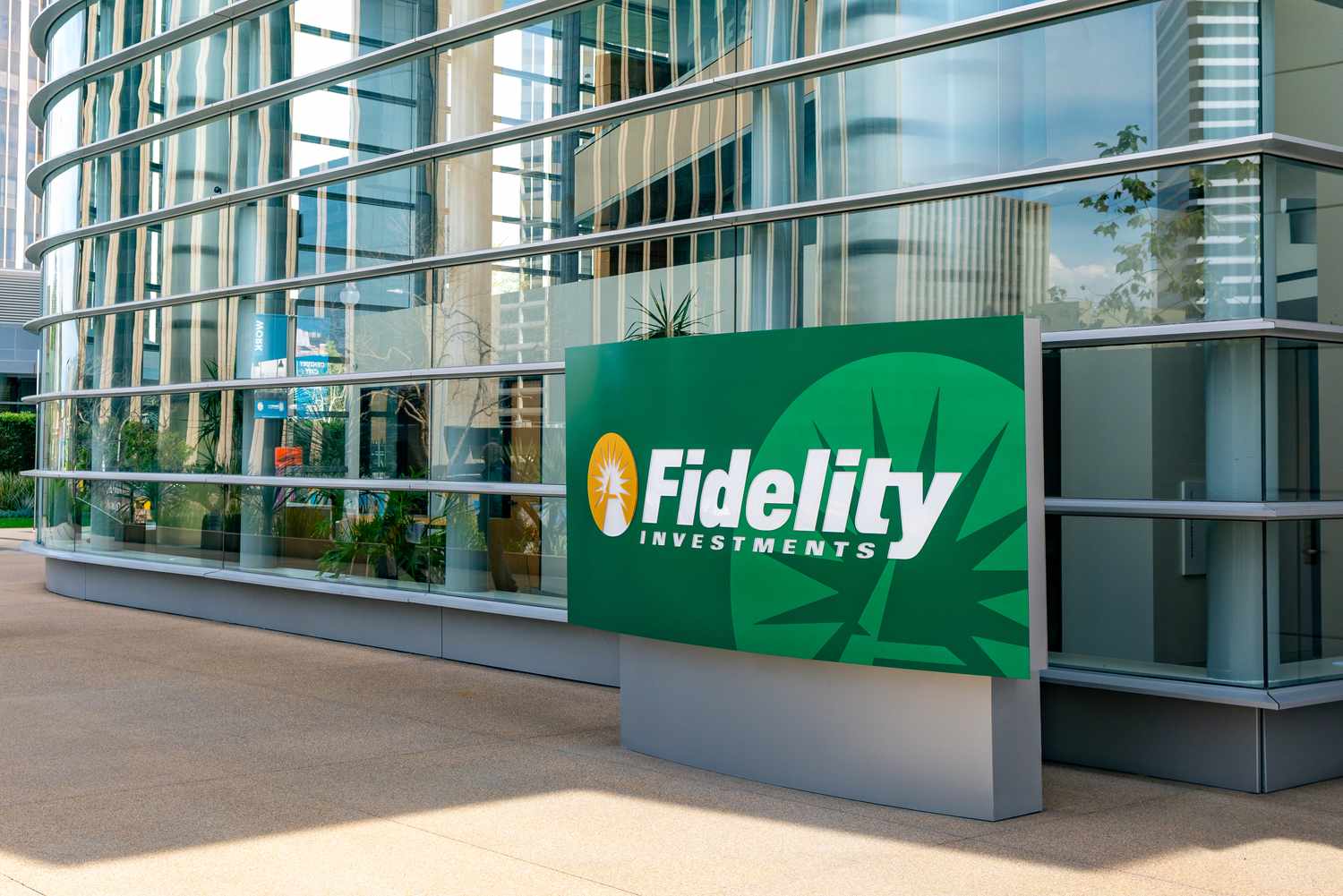
Introduction
In the rapidly evolving landscape of digital finance, Fidelity Investments remains a titan of the industry. Known for balancing institutional-grade power with a user-friendly interface, Fidelity has become a go-to platform for millions of investors worldwide.
Whether you are a retail investor looking for a reliable place to park your IRA, a day trader seeking advanced execution tools, or a beginner starting with just $5, Fidelity offers a comprehensive ecosystem designed to scale with your financial journey. As we move through 2026, the platform continues to gain massive attention for its “zero-fee” philosophy and its aggressive expansion into digital assets and fractional trading.
What Is Fidelity?
Fidelity Investments is one of the largest and most diversified financial services providers in the world. Founded in 1946, the company has transitioned from a traditional mutual fund powerhouse into a cutting-edge digital brokerage.
The platform serves as an all-in-one financial hub. According to Investopedia, Fidelity is consistently ranked as a top broker for its research and education. It provides everything from standard brokerage accounts and retirement planning (401k/IRA) to wealth management and ESG (Environmental, Social, and Governance) investing.
Target Users:
- Long-term Investors: Seeking low-cost index funds (Fidelity ZERO funds).
- Active Traders: Utilizing the Active Trader Pro desktop platform.
- Young Investors: Leveraging fractional shares and the “Youth Account” features.
- Retirees: Managing complex distributions and wealth preservation.
Key Features
Fidelity’s success in 2026 is driven by several standout features that differentiate it from “budget” apps:
- Fidelity ZERO® Funds: The industry’s first suite of mutual funds with a 0% expense ratio, meaning no management fees for investors.
- Fractional Share Trading: Known as “Stocks by the Slice,” users can buy over 7,000 U.S. stocks and ETFs for as little as $1.
- Active Trader Pro: A downloadable desktop platform providing real-time data, advanced charting, and customizable trading layouts.
- Fidelity Crypto: Integrated access to trade Bitcoin and Ethereum alongside traditional stocks.
- Full View®: A robust net-worth tracking tool that aggregates all your financial accounts (even non-Fidelity ones) into one dashboard.
- Cash Management Account: A hybrid checking/brokerage account that offers ATM fee reimbursements and competitive interest rates on uninvested cash.
Pros (Advantages)
✔ Superior Execution Quality: Fidelity does not sell your stock trade flow (PFOF) to market makers, often resulting in better price improvement for users.
✔ Zero-Fee Infrastructure: $0 commissions on online U.S. stock, ETF, and options trades, plus no account minimums or hidden maintenance fees.
✔ Exceptional Research: Access to independent reports from 20+ providers, including Argus, Reuters, and McLean Capital.
✔ 24/7 Support: Unlike many “app-only” competitors, Fidelity offers 24/7 phone support and physical branches for in-person consultations.
✔ High-Yield Cash Sweep: Uninvested cash is automatically swept into a money market fund (like SPAXX), currently yielding significantly higher than traditional bank savings.
Cons (Disadvantages)
✖ Platform Complexity: The sheer volume of features and menus can be overwhelming for a complete novice compared to simpler apps like Robinhood.
✖ No Futures or Forex: As of early 2026, Fidelity still lacks direct trading for futures or dedicated Forex pairs, forcing specialized traders elsewhere.
✖ Dated Mobile UI Elements: While the app has seen major updates, some legacy users find certain deep-level account menus less intuitive than modern fintech competitors.
Key Points Summary
- Cost: $0 for stocks/ETFs; $0.65 per options contract.
- Best For: All-around investing, retirement, and research.
- Security: SIPC insured + “Excess of SIPC” coverage up to $1 billion.
- Assets: Stocks, ETFs, Mutual Funds, Bonds, Options, and Crypto (BTC/ETH).
Comparison: Fidelity vs. The Competition
| Feature | Fidelity | Yahoo Finance | TradingView |
| Primary Use | Full-Service Brokerage | News & Basic Tracking | Advanced Charting & Social |
| Trading | Native Execution | Linked Brokerages only | Linked Brokerages only |
| Research | Institutional Reports | Aggregated News | Technical Analysis Tools |
| Fees | $0 Commissions | Subscription (Plus/Premium) | Subscription (Pro/Premium) |
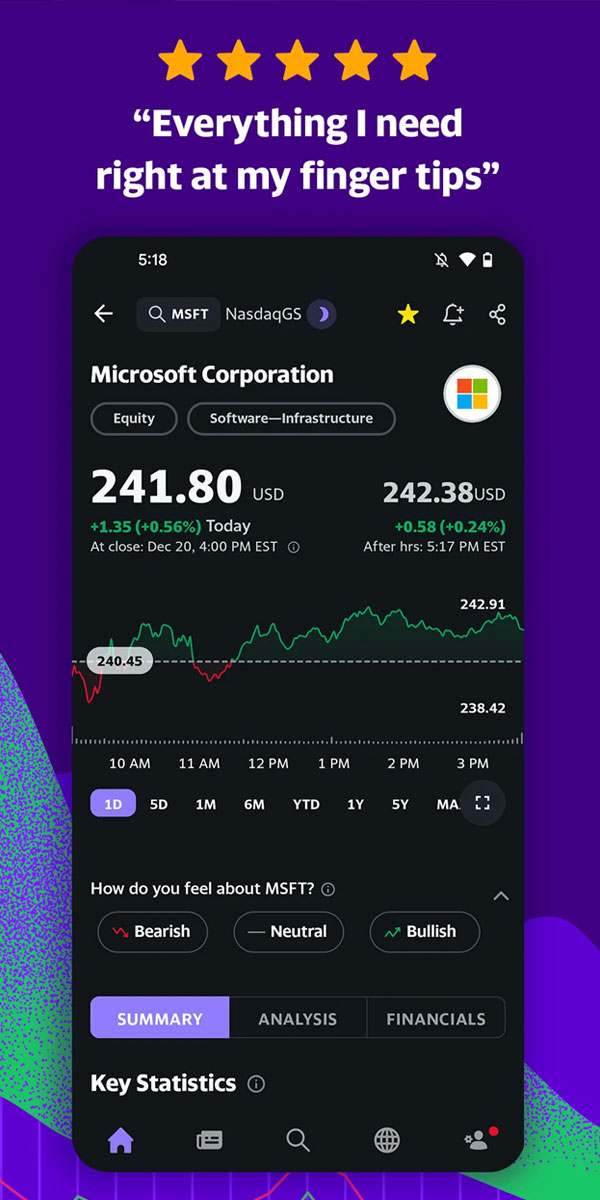
While Yahoo Finance is excellent for quick news and TradingView is the king of technical charting, Fidelity is a complete financial engine where you actually hold and grow your assets.
FAQ Section (SEO Boost)
Q1: Is Fidelity free to use?
Yes. There are no fees to open or maintain an account, and online U.S. stock and ETF trades are $0.
Q2: Is Fidelity safe for my money?
Fidelity is highly secure. It is regulated by the SEC and FINRA, and accounts are protected by SIPC insurance. They also offer a Customer Protection Guarantee to reimburse for unauthorized activity.
Q3: Can I buy Bitcoin on Fidelity?
Yes, through Fidelity Crypto, you can trade Bitcoin and Ethereum. However, you cannot currently withdraw your coins to a private cold wallet.
Q4: Does Fidelity offer fractional shares?
Yes. You can trade fractional shares (Stocks by the Slice) for more than 7,000 stocks and ETFs with a $1 minimum.
Conclusion
Fidelity Investments remains the “Gold Standard” for a reason. In 2026, it successfully bridges the gap between old-school reliability and new-age tech.
- Who should use it: Everyone from college students starting their first Roth IRA to seasoned traders who value execution quality over flashy UI.
- Who should look elsewhere: High-frequency Forex or Futures traders who require specialized platforms like Interactive Brokers or Thinkorswim.
Overall Rating: 4.9/5
SEO Tags: Fidelity Review 2026, Best Online Brokerage, Fidelity vs TradingView, Zero Fee Investing, Fidelity Active Trader Pro