
In the world of professional stock analysis, few names carry as much weight among value investors as GuruFocus. As we navigate the complex market landscape of 2026, retail and institutional investors alike are searching for tools that provide more than just surface-level price charts.
This comprehensive GuruFocus review explores whether this powerhouse platform remains the gold standard for fundamental analysis or if its premium price tag is starting to feel dated in an era of AI-driven research.
Introduction
GuruFocus is a high-end financial data and stock research platform that specializes in value investing. Founded by Dr. Charlie Tian in 2004, the platform was built on the philosophy of legendary investors like Warren Buffett and Peter Lynch.
The platform is designed for long-term value investors, fundamental analysts, and “shameless cloners”—those who track the moves of billionaire fund managers. It has gained massive popularity for its ability to condense 30 years of financial history into readable charts and automated valuation models, helping users find “margin of safety” in an often overpriced market.
What Is GuruFocus?
At its core, GuruFocus is a massive database of global financial information. Unlike platforms that focus on “hype” or “day trading,” GuruFocus prioritizes intrinsic value.
- Platform Purpose: To provide professional-grade fundamental data, institutional “Guru” tracking, and automated valuation tools to individual investors.
- Key Services: Stock screening, DCF (Discounted Cash Flow) calculators, 30-year financial histories, and insider trading alerts.
- Target Users: Serious retail investors, hedge fund analysts, and financial advisors who rely on “hard numbers” rather than technical indicators.
- Industry Relevance: It is frequently cited by major financial outlets like Google Finance, Investopedia, and Wikipedia as a leading source for “smart money” tracking and historical financial ratios.
Key Features
- Guru Tracking: Monitor the portfolios of over 175 legendary investors (like Berkshire Hathaway and Li Lu) with daily updates on their latest buys and sells.
- All-in-One Screener: One of the most powerful screeners in the industry, allowing users to filter stocks by over 500 different financial metrics.
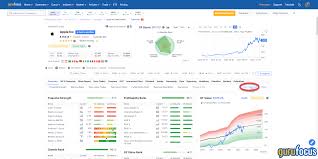
- Interactive 30-Year Charts: View three decades of financial data (PE ratios, debt levels, revenue growth) on a single, easy-to-digest timeline.
- GuruAI Assistant: New for 2026, an integrated AI that can answer complex queries like, “Which stocks in the S&P 500 have the highest ROIC and lowest debt-to-equity?”
- Excel/Google Sheets Add-on: Export raw data directly into your own spreadsheets for custom modeling and portfolio tracking.
Pros (Advantages)
✔ Unrivaled Historical Data – Accessing up to 30 years of data allows you to see how a company performed during the 2008 crash, the 2020 pandemic, and the 2022 inflation spike.
✔ Automated Valuation Models – Instantly see a stock’s “GF Value” or run a DCF analysis without manually inputting data.
✔ Global Coverage – Unlike many competitors, GuruFocus provides deep data for markets in Asia, Europe, and Latin America.
✔ Insider Activity – Track when CEOs and CFOs are buying or selling their own company’s shares.
Cons (Disadvantages)
✖ Steep Learning Curve – The interface is data-heavy and can be overwhelming for beginners who just want a “buy/sell” rating.
✖ Premium Pricing – The subscription costs can be significantly higher than basic tools like Yahoo Finance or Seeking Alpha.
✖ Aesthetics – While functional, the UI feels a bit “Windows 95” compared to the sleek, modern designs of newer fintech apps.
Key Points Summary
- Best For: Serious value investors and fundamental analysts.
- Standout Tool: The 30-year financial data visualization.
- Unique Selling Point: Tracking billionaire hedge fund managers (cloning).
- Price Point: High-tier (Subscription-based by region).
Comparison Section: GuruFocus vs. The Competition
| Feature | GuruFocus | Yahoo Finance | TradingView |
| Primary Focus | Fundamental / Value | News / General Data | Technical Analysis |
| Historical Data | 30 Years | 5–10 Years | Variable |
| Guru Tracking | Advanced (13F Analysis) | Basic | N/A |
| Ease of Use | Moderate to Hard | Easy | Moderate |
| Best For | “Buy and Hold” Investors | Casual Tracking | Day/Swing Traders |
While Yahoo Finance is great for quick news and TradingView is the king of charting, GuruFocus remains the winner for anyone doing a deep dive into a company’s balance sheet.
FAQ Section
Q1: Is GuruFocus free to use?
A: There is a limited free version, but most of the powerful tools (like the full screener and Guru tracking) require a paid subscription. They typically offer a 7-day free trial.
Q2: Is GuruFocus safe?
A: Yes. GuruFocus is a legitimate financial research company based in the US and is used by professional money managers worldwide.
Q3: How much does GuruFocus cost in 2026?
A: Pricing varies by region (e.g., US, Europe, or Asia). Generally, a single-region subscription starts around $450–$500 per year.
Q4: Can I use GuruFocus for crypto or forex?
A: No, GuruFocus is strictly focused on equities (stocks), ETFs, and mutual funds.
Conclusion
Our GuruFocus review finds that the platform remains an essential tool for the disciplined value investor. If you are a beginner looking for “hot tips,” you might find it too complex and expensive. However, if you are a serious investor who wants to verify a company’s financial health and follow the “smart money,” the data provided is worth every penny.
Final Verdict: * Use it if: You prioritize fundamentals, want deep historical data, and manage a significant portfolio.
- Skip it if: You are a day trader or have a small portfolio where the subscription cost would eat too much of your returns.
Overall Rating: 4.5/5
SEO Tags
GuruFocus review, value investing tools, stock screener 2026, fundamental analysis software, Warren Buffett stock picks