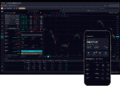



In an era of volatile markets and “AI-driven” hype, finding a reliable North Star for your investments is harder than ever. Morningstar has long been the gold standard for independent research, and in 2026, it remains a powerhouse for those seeking to cut through the noise. Whether you are a retirement planner or a value-driven stock picker, this platform provides the fundamental analysis necessary to build a resilient portfolio
Introduction
Morningstar is a global financial services firm that provides a massive library of investment data, research, and analysis. Unlike many modern “fintech” apps that focus on social sentiment or technical day-trading charts, Morningstar is built on the philosophy of fundamental analysis.
The platform is designed for long-term investors who prioritize “Fair Value” over market hype. In 2026, it has gained renewed attention as investors flee the overconcentrated “Magnificent Seven” and seek undervalued opportunities in mid-cap stocks, international markets, and fixed income.
What Is Morningstar?
Founded in 1984, Morningstar, Inc. has grown from a small Chicago-based operation into a global authority cited by Google Finance, Wikipedia, and Investopedia.
The platform’s primary purpose is to empower individual investors by providing the same level of data and qualitative analysis usually reserved for institutional pros. Its flagship product, Morningstar Investor (formerly Morningstar Premium), provides:
- Independent Analyst Ratings: Qualitative reports on over 1,600 stocks and thousands of funds.
- Data Coverage: Financial metrics on more than 48,000 securities globally.
- Industry Relevance: Morningstar’s “Star Ratings” for mutual funds are the industry benchmark, often used by financial advisors to validate fund quality.
Key Features
- Portfolio X-Ray: This tool analyzes your holdings to reveal hidden risks, such as geographic concentration, sector overlap, or excessive fees.
- Analyst Reports: Deep-dive PDF reports that explain why a stock is rated as it is, including “Moat” ratings (competitive advantage) and “Stewardship” ratings (management quality).
- Fair Value Estimates: A proprietary calculation of what a stock is actually worth, helping you identify if you are overpaying.
- Stock & Fund Screeners: Advanced filters that allow you to find “Gold-rated” funds or stocks trading at a deep discount to their fair value.
- Morningstar Medalist Ratings: A forward-looking system (Gold, Silver, Bronze) that predicts a fund’s ability to outperform its benchmark over a full market cycle.
Pros (Advantages)
✔ Unbiased Research: Morningstar does not accept payments from fund managers to rate their products, ensuring high-integrity data.
✔ Comprehensive Mutual Fund Data: Simply the best in the business for analyzing expense ratios and historical fund performance.
✔ Portfolio Health Tools: The X-Ray tool is an industry leader for spotting “hidden” risks in a diversified portfolio.
✔ Value-Centric Perspective: Perfect for investors who want to buy high-quality assets at a discount rather than chasing trends.
✔ Global Reach: Extensive coverage of international stocks and emerging markets, which is a major theme for 2026.
Cons (Disadvantages)
✖ Learning Curve: The interface is data-dense and can feel “clunky” or overwhelming for beginners.
✖ Mobile App Limitations: While the desktop site is robust, the mobile experience still lags behind modern trading apps like Robinhood or Webull.
✖ Lack of Technical Tools: If you are a swing trader looking for RSI, MACD, or candlestick patterns, Morningstar’s tools will feel insufficient.
Key Points Summary
- Best For: Long-term, fundamental, and value investors.
- Core Value: Independent qualitative research and the “Fair Value” estimate.
- Pricing: Approximately $34.95/month or $249/year (often discounted to $199 during sales).
- Standout Tool: Portfolio X-Ray for identifying risk and overlap.
Comparison Section
When choosing a research platform, Morningstar often goes head-to-head with Seeking Alpha and Zacks.
| Feature | Morningstar | Seeking Alpha | Zacks Investment Research |
| Primary Style | Fundamental / Long-term | Crowdsourced / Community | Quantitative / Earnings |
| Best For | Funds & Value Stocks | Growth Stocks & Ideas | Short-term Momentum |
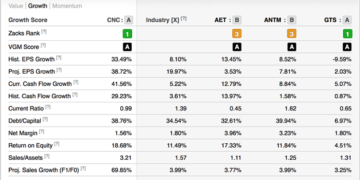
| Key Metric | Star Rating / Fair Value | Quant Ratings | Zacks Rank (#1 Strong Buy) |
| Pricing | Moderate (~$249/yr) | Moderate (~$239/yr) | Higher (~$249/yr basic) |
Morningstar vs. Seeking Alpha: Seeking Alpha is better for finding “the next big thing” through community blogs, whereas Morningstar is superior for verifying the safety and quality of established funds and stocks.
Morningstar vs. Zacks: Zacks focuses heavily on earnings surprises and 1–3 month price movements. Morningstar is the better choice for the 5–10 year investor.
FAQ Section
Q1: Is Morningstar free to use?
Morningstar offers a limited free version with basic quotes and news. However, the most valuable features—like Analyst Reports, Fair Value estimates, and the Portfolio X-Ray—require a Morningstar Investor subscription.
Q2: Is Morningstar safe?
Yes. Morningstar is a publicly traded company (Nasdaq: MORN) and a highly regulated financial services firm. They do not hold your money; they provide the data you use to manage it.
Q3: How much does Morningstar Investor cost in 2026?
The standard price is $249 annually, which averages to about $20.75 per month. Monthly plans are typically available for $34.95.
Q4: Is the Star Rating a guarantee of performance?
No. The Star Rating for funds is based on past risk-adjusted performance. While it is a helpful indicator, it does not guarantee future returns.
Conclusion
Morningstar remains an essential tool in 2026 for the “thinking investor.” If you want to move away from the noise of social media financial advice and build a portfolio based on math and management quality, Morningstar is worth every penny.
Who should use Morningstar:
- Retirement savers looking to optimize their 401(k) or IRA.
- Value investors seeking “moat” businesses at a discount.
- Investors who hold a large number of mutual funds or ETFs.
Who should look for alternatives:
- Day traders or technical analysts.
- Crypto-only investors (Morningstar’s crypto coverage is still secondary).
- Investors who prefer a minimalist, mobile-first interface.
Overall Rating: 4.7/5
SEO Tags: Morningstar review, investment research tools, stock analysis software 2026, fundamental analysis, Portfolio X-Ray tool